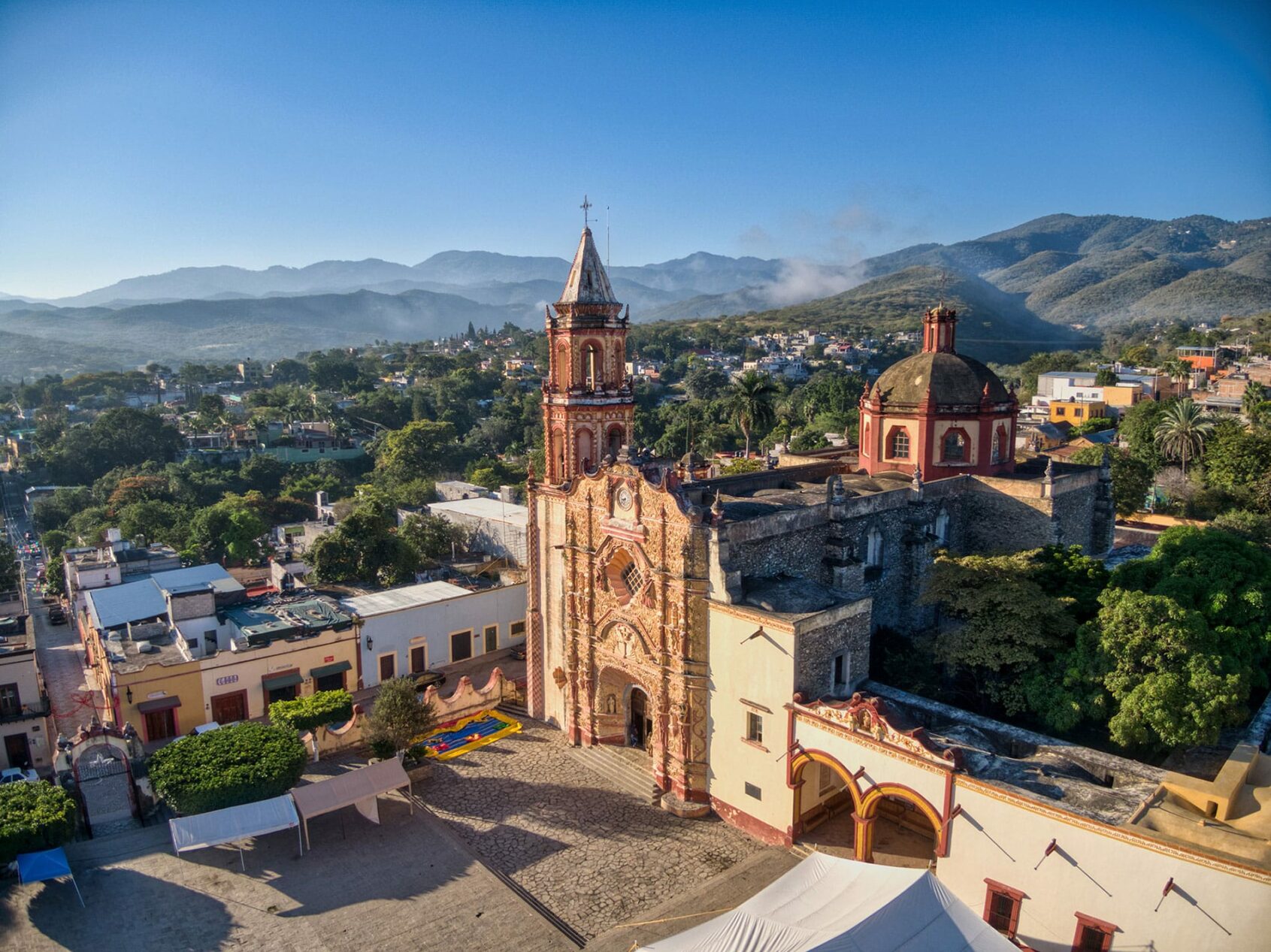
Landa, a town of origin
Landa is a place of faith, beauty and culture in the heart of the Sierra Gorda with a variety of climates that you won't believe.
Land's roots have their origin in pre-Hispanic times, as it was a territory occupied by Pames, Otomi and Huastecos indigenous populations who left history and living memories.
The name Landa has its origin from Lan-Há, which comes from the Chichimeca and means "swampy place". It is in 1919 when the Matamoros was added by the insurgent Don Mariano Matamoros.
Among the main attractions are two of the Franciscan missions named Cultural Heritage of Humanity: Santa María de Landa and San Francisco del Valle de Tilaco.
In the municipal seat you can visit the Museum of Agricultural Art, where old photographs, weapons and farming tools that were used in the past are exhibited.
Landa has two community museums, the Tilaco Community Museum, and the Agua Zarca Community Museum, which also exhibit historical photographs and documents about the history of the region, as well as tools that people of the time used to do their agricultural work.
Franciscan Missions
Landa de Matamoros is home to two of the five Franciscan Missions
Considered the most beautiful and ornate of the Missions, the Landa Mission, dedicated to the Immaculate Conception was built between 1761 and 1764 by Fray Miguel de Campa, although many other friars also participated in its Baroque-style construction. It was the last of the five Missions to be built.
The Tilaco Mission was built between 1754 and 1762 by Fray Juan Crespí and is dedicated to St. Francis of Assisi. It is the best preserved of the Missions, although its ornamentation is more austere and subtle than the others. Among its reliefs, figures of angels, cobs and even mermaids with indigenous features can be seen.
Get to know them through guided tours with explanations about the historical, architectural and cultural aspects to learn about their legacy, their history and their artistic singularities.
In the ejido of El Madroño, there is a natural area where, in addition to beautiful strawberry trees, there are marine fossils dating back approximately 100 million years, when what is now the Sierra Gorda, was submerged in a sea.
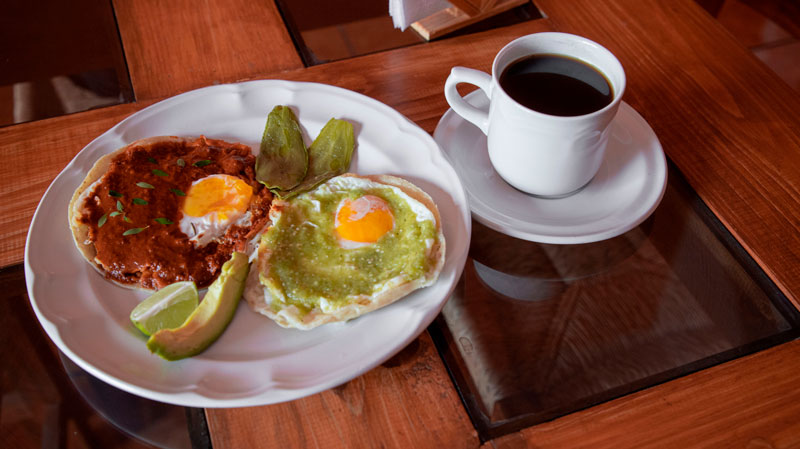
Local gastronomy
The gastronomy of the municipality of Landa de Matamoros makes up a range of flavors and colors unique to the region. Enriched by the contributions of Huasteca food, Landense food is full of traditions that lead diners to enjoy the flavors of recipes of yesteryear.
Among the typical dishes are nopales with pipian, nopales en penca, enchiladas, gorditas de horno, bocoles, cecina, pemoches with egg, red and green mole, barbecue, beef and pork rinds, quelites, drunken sauce, chili with vinegar or pulque, pulque bread and its unmistakable zacahuil, a large tamale, with pork, wrapped in banana leaves.
The classic drink of the region is pulque, a drink of the ancestral gods, but you will also find a variety of artisanal liquors, brandy, fresh fruit waters and atole de teja. Finally, don't miss out on trying the coffee grown in the region of Agua Zarca and Neblinas; in Landa, coffee is so special that it is offered to all visitors, regardless of the time, as part of an ancient custom.
And don't forget dessert: try some traditional sweets of pepita, sweet potato, papaya and pumpkin, or some pepitorias, delicious coconut alfajores or peanut and pumpkin pilón pachos.
Local gastronomy
The gastronomy of the municipality of Landa de Matamoros makes up a range of flavors and colors unique to the region. Enriched by the contributions of Huasteca food, Landense food is full of traditions that lead diners to enjoy the flavors of recipes of yesteryear.
Among the typical dishes are nopales with pipian, nopales en penca, enchiladas, gorditas de horno, bocoles, cecina, pemoches with egg, red and green mole, barbecue, beef and pork rinds, quelites, drunken sauce, chili with vinegar or pulque, pulque bread and its unmistakable zacahuil, a large tamale, with pork, wrapped in banana leaves.
The classic drink of the region is pulque, a drink of the ancestral gods, but you will also find a variety of artisanal liquors, brandy, fresh fruit waters and atole de teja. Finally, don't miss out on trying the coffee grown in the region of Agua Zarca and Neblinas; in Landa, coffee is so special that it is offered to all visitors, regardless of the time, as part of an ancient custom.
And don't forget dessert: try some traditional sweets of pepita, sweet potato, papaya and pumpkin, or some pepitorias, delicious coconut alfajores or peanut and pumpkin pilón pachos.
In Tilaco is this 1942 Chevrolet truck, which was the first automotive vehicle to enter the Sierra Gorda. He was a key piece for the construction of the road that was able to connect Tilaco with the other communities.
In Tilaco is this 1942 Chevrolet truck, which was the first automotive vehicle to enter the Sierra Gorda. He was a key piece for the construction of the road that was able to connect Tilaco with the other communities.
Crafts
The passion of the artisans who make handicrafts in different communities of the municipality give Landa its identity. Here you can find everything from wool backpacks, embroidery on tablecloths and clothes, pine straw and wood figures, utensils such as pots and clay jugs, comales, censers for copal, to various objects made with palm.
Do you already know the Hotel Mexico Plaza Querétaro? Stay in a place with all the amenities, ideal for rest and work, with a privileged location in the capital of Querétaro. Find out about their offer and booking.
Travel back in time and learn about the history of Querétaro. Hop on one of the Stagecoaches and tour some of the most emblematic places in the city, enjoy a ride that will make you feel like you are in another era.
Incredible cabins with pools, perfect for vacationing with the family and enjoying hot days to the fullest.