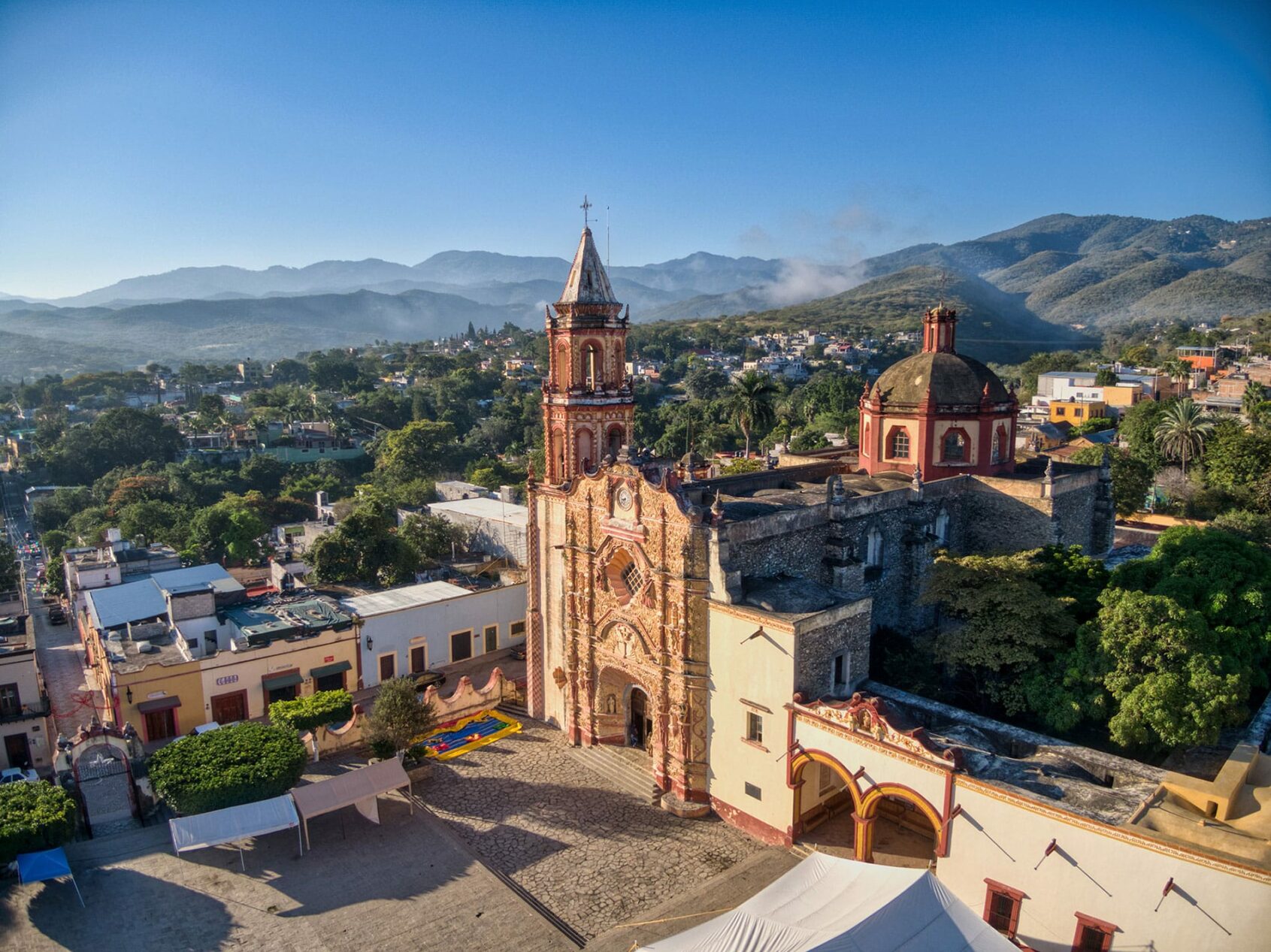
Querétaro is a state that is home to a cultural and historical richness. Safeguarding treasures that have marked the development of the country, such as the well-known Peña de Bernal, turning out to be one of the largest monoliths in the world. However, it is not the only corner of the state with a history worthy of recognition. In the municipality of Corregidora, you will find San Francisco Anbanica, a neighborhood that, thanks to its identity, traditions and ancestral heritage, within the framework of the International Tianguis of Magical Towns, held in San Antonio, Texas, was declared on June 29, 2024 as a Magical Neighborhood by the Federal Ministry of Tourism.
The name San Francisco Anbanica arises from the fusion between the patron saint, San Francisco, and the Otomi word "ambanic", which means "high temple", in reference to the pyramid of El Cerrito.
This neighborhood is located at the foot of the Archaeological Zone of El Cerrito, where one of the largest pyramids in northern Mesoamerica is located. With the arrival of the Franciscan friars in the sixteenth century, a process of evangelization began that would profoundly transform the region.
In 1531, a parish was established near El Cerrito, and later, in 1632, the Franciscan Fray Nicolás de Zamora placed an image of the Virgin Mary at the foot of the pyramid, thus initiating the cult of the Virgin of El Pueblito. In 1736 the Sanctuary of the Virgin was built, and later a Franciscan convent, consolidating the religious syncretism that characterizes the identity of the place.
Years later, with the municipalist reform of Venustiano Carranza, the municipality was renamed Corregidora, consolidating with this name in 1939, with El Pueblito as its capital.

The name San Francisco Anbanica arises from the fusion between the patron saint, San Francisco, and the Otomi word "ambanic", which means "high temple", in reference to the pyramid of El Cerrito.
This neighborhood is located at the foot of the Archaeological Zone of El Cerrito, where one of the largest pyramids in northern Mesoamerica is located. With the arrival of the Franciscan friars in the sixteenth century, a process of evangelization began that would profoundly transform the region.
In 1531, a parish was established near El Cerrito, and later, in 1632, the Franciscan Fray Nicolás de Zamora placed an image of the Virgin Mary at the foot of the pyramid, thus initiating the cult of the Virgin of El Pueblito. In 1736 the Sanctuary of the Virgin was built, and later a Franciscan convent, consolidating the religious syncretism that characterizes the identity of the place.
Years later, with the municipalist reform of Venustiano Carranza, the municipality was renamed Corregidora, consolidating with this name in 1939, with El Pueblito as its capital.
Why was it named Barrio Mágico?
The Magical Neighborhoods program was created in 2021 by the Federal Ministry of Tourism as an alternative to the Magical Towns, in order to recognize urban spaces with history, identity and cultural richness. In this context, San Francisco Anbanica was chosen for its historical and cultural richness, for its living traditions, its heritage spaces and its direct connection with pre-Hispanic and colonial roots.
With this distinction, San Francisco Anbanica joins the national tourist map as a destination with soul, tradition and community pride.
What can you do and visit in San Francisco Anbanica?
In addition to its historical value, San Francisco Anbanica offers visitors a variety of cultural, religious, and recreational spaces that capture the spirit of the neighborhood:
Let's start with theArchaeological Zone of El Cerrito, with a pyramid that offers an in-depth vision of the pre-Hispanic civilizations of the region, and its El Cerrito Site Museum that adds valuable information to the experience.
As for museums, the Anbanica Museum offers a detailed look at the history of the neighborhood, its traditions and local art, while the community museum "Severiano Hernandez" preserves important archaeological pieces and a collection of traditional stamps used to paint tortillas in community celebrations. Also the Rubén González Museum Art and Tradition and Faith which preserves the collection of caricature as a means of cultural dissemination.
On the other hand, we find the Sanctuary of the Virgin of El Pueblito, which turns out to be one of the most venerated temples in Querétaro and an important pilgrimage center that receives thousands of faithful every year during religious festivals.
With the declaration as a Magical Neighborhood, San Francisco Anbanica not only gains visibility nationally, but is strengthened as a community proud of its past and committed to its future. This recognition allows improving tourism infrastructure, encouraging local commerce, preserving heritage and promoting sustainable cultural tourism.
San Francisco Anbanica is home to centuries of history, faith, tradition, and culture. Today, it opens its doors to the world as a destination that honors its heritage and celebrates its identity. To visit it is to experience Querétaro from its roots.
Do you already know the Hotel Mexico Plaza Querétaro? Stay in a place with all the amenities, ideal for rest and work, with a privileged location in the capital of Querétaro. Find out about their offer and booking.
Travel back in time and learn about the history of Querétaro. Hop on one of the Stagecoaches and tour some of the most emblematic places in the city, enjoy a ride that will make you feel like you are in another era.
Incredible cabins with pools, perfect for vacationing with the family and enjoying hot days to the fullest.